Dear ##Contact First Name##,
What if the one thing keeping you alive, suddenly threatened to kill you?
I know this sounds like the stuff of nightmares. But for Craig, it was all terrifying real – when the treatment for his aggressive bowel cancer caused a severe allergic reaction.
Today, you can make sure that patients like Craig can continue their treatment – without it threatening their life.
Craig is a loving husband and devoted father from North Perth. At just 49, he found himself in the fight of his life – when he was diagnosed with stage four bowel cancer.
“I was terrified, but my fear wasn’t for me. It was more for what I would be leaving behind. My family is my world. I didn’t want to be just a memory to my kids.”
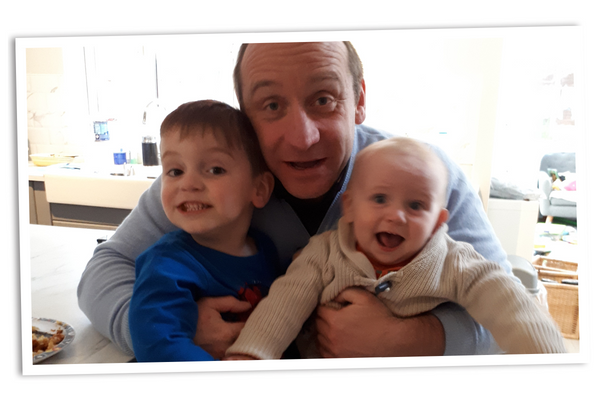
Craig with his two boys, Kade and Connor.
Craig started an intensive course of chemotherapy, with the drug Oxaliplatin. At first, his cancer responded well and it was all looking hopeful. Then the nightmare happened.
His lips and tongue swelled up. Craig was dangerously close to going into anaphylactic shock and his airway could have easily closed over – which could have been fatal.
Doctors identified Oxaliplatin as the cause of the allergic reaction, and they put Craig on a new drug. But it didn’t work. His cancer stopped responding.
“That was the scariest news. It felt like the end was near. If the new drug wasn’t working, and I couldn’t take the drug did work, what options did I have left?”
There is one other option, ##Contact First Name##. And it comes from the research that you can help fund today – by giving a generous gift.
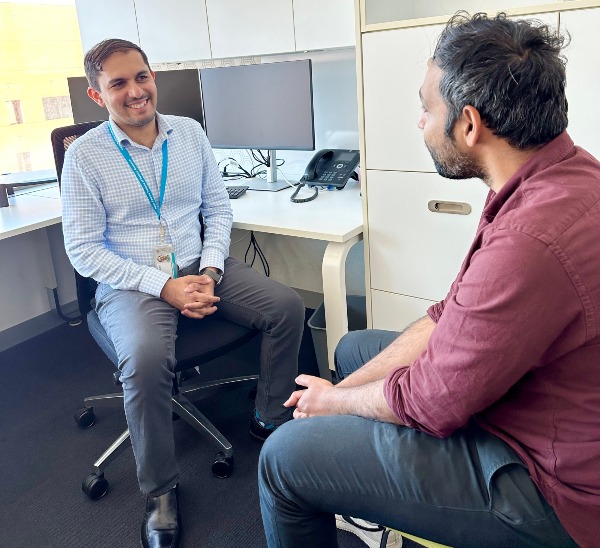
With a grant from Charlies Foundation for Research, Dr Piyush Grover and his team at Sir Charles Gairdner Hospital are investigating allergic reactions to cancer medication.
“When a patient is in this predicament and can’t have the care they need,” says Dr Grover, “it’s so sad. We’re finding out why it happens and how to prevent it.”
Dr Grover’s work is funded by supporters like you.
And more research is urgently needed. As many as one in five cancer patients suffer allergies to their medication. For one in 50, the reactions are life threatening.
Dr Grover and his team are dedicated to improving how cancer is treated, so patients like Craig can continue their medication – without it causing a potentially fatal reaction.
But they can only do this vital work with your help, ##Contact First Name##. Please will you give a generous gift today?
Just imagine how terrifying it would feel, as your skin puffs up and your lips start to swell – when the one thing keeping you alive, suddenly threatens to kill you.
You can help stop this nightmare from becoming a reality – by giving now to fund more research. Thank you.

Vicki Rasmussen
Chief Executive Officer
Charlies Foundation for Research