Confirmation Content
Confirmation Content
After a devastating diagnosis, all that matters is making the most of the time you have left, with the people you love.
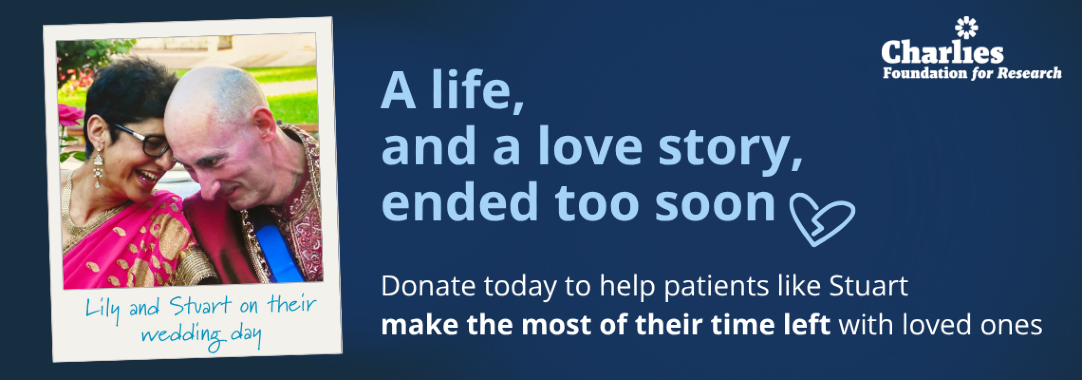
In the prime of his life, Stuart was told he had an aggressive, incurable form of brain cancer.
Confirmation Content
He and his partner Lily were devastated to learn that their time together was limited. Wanting to fill every moment with love and meaning, they decided to get married.
When you’ve heard the worst, it’s not so much about how long you live for—but how well you live. And that completely depends on the care you receive.
That’s why the Foundation needs your help to fund research that could improve care and quality of life for patients like Stuart.
Stuart’s brain cancer took away his ability to stand up because he developed a condition called lateropulsion—also known as ‘Pusher Syndrome’. But it couldn’t take away his dream—getting to his feet and giving Lily a proper hug, on their wedding day.
He worked tirelessly with Mena and Danielle, his physiotherapists, to achieve his goal. When the wedding arrived, Stuart stood up proudly. It was a moment that meant everything. And it’s one that Lily will never forget.
“I walked into the courtyard for the wedding and I saw Stuart standing up tall to greet me. My heart overflowed with so many emotions. Pride and joy and grief.”
Tragically, just five months later, Stuart passed away. He was just 54 years old.
There are many other patients whose time runs out before they achieve their goals—because they don’t have the right care.
Inspired by Stuart’s story, and with funding from the Foundation and the Australian Government Research Training Program Stipend and Domestic Fees Offset Scholarship at the University of Western Australia, Mena—a Senior Neurological Physiotherapist at Sir Charles Gairdner Hospital—is researching the mechanisms of Pusher Syndrome in brain cancer patients.
Mena’s vision is to establish a ‘pathway’ that brings together neurosurgery, oncology and rehabilitation, for patients with brain and spinal tumours.
This would lead to more integration and collaboration across specialties, so patients have their needs understood and get the right care, at the right time, to achieve their goals.
Mena is already making progress, recruiting patients for her study and collecting data. But the ‘pathway’ is still a long way off. The only way to get there? More research.
We’re counting on your support to help raise $100,000 by 30 June.
Please donate now and help make sure patients’ lives are filled with dignity, meaning and love—right to the very end.
Confirmation Content
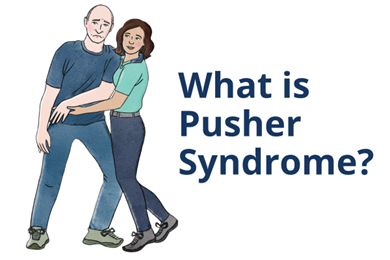
Pusher Syndrome, also known as ‘lateropulsion’, is commonly seen in patients after a stroke. But it can also occur in those with brain cancer. Patients with paralysis to one side of their body and no sense of being upright use their ‘non-affected’ or good side to push towards their weak side. This leaves them unable to stand up independently.
Confirmation Content
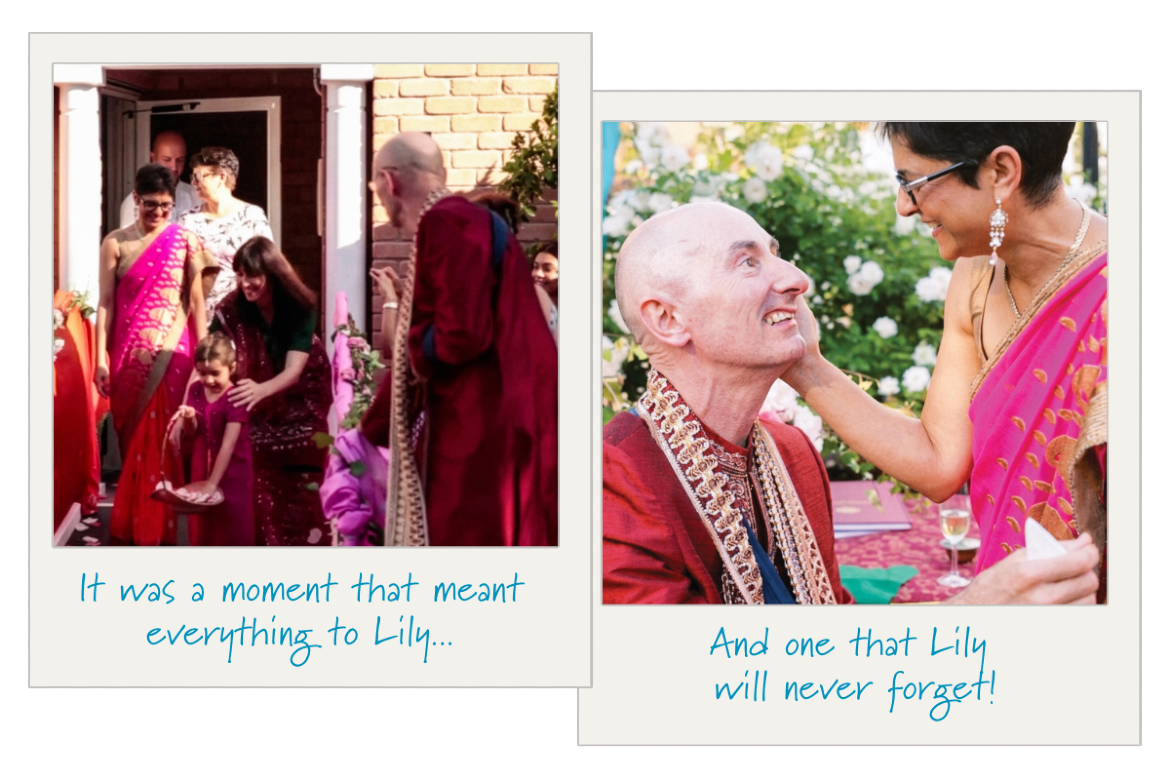
“I couldn’t believe my eyes when I walked into the courtyard. There was Stuart standing up tall to greet me. My heart just overflowed with pride and joy and grief. His wish was for all patients like him to have access to care that helps them make the most of the time they have left, with the people they love.”
– Lily, Stuart’s Wife
Confirmation Content
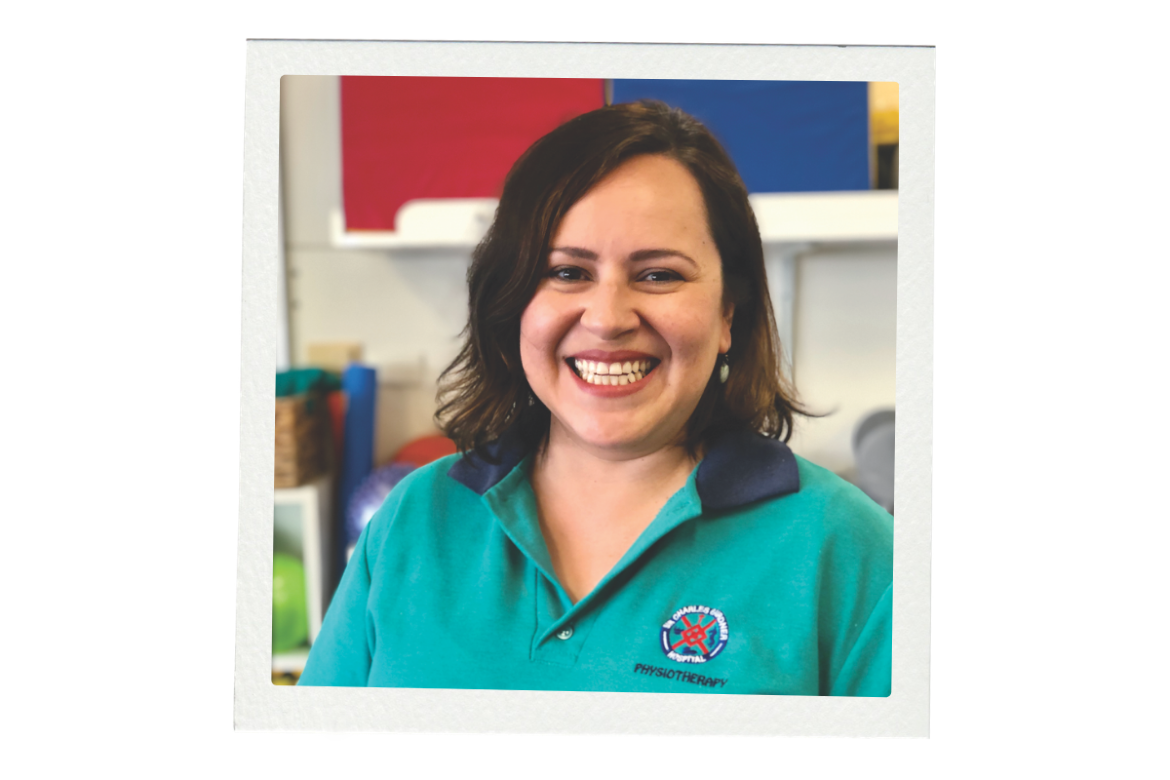
Mena’s research is funded in part by the Foundation as well as the Australian Government Research Training Program Stipend and Domestic Fees Offset Scholarship at the University of Western Australia. Mena’s research focuses on understanding the mechanisms of Pusher Syndrome in patients with a brain tumour before and after neurosurgery. This research will help clinicians and researchers in improving care pathways and future research on tailored rehabilitation for patients with a brain tumour.
Confirmation Content