Occupational Therapy Week
How research is transforming hand therapy
For Occupational Therapy Week, we’re celebrating OT Bec Kevill and her team at Sir Charles Gairdner Hospital whose award-winning research is helping patients with hand and upper limb conditions access treatment sooner and reduce the need for surgery.
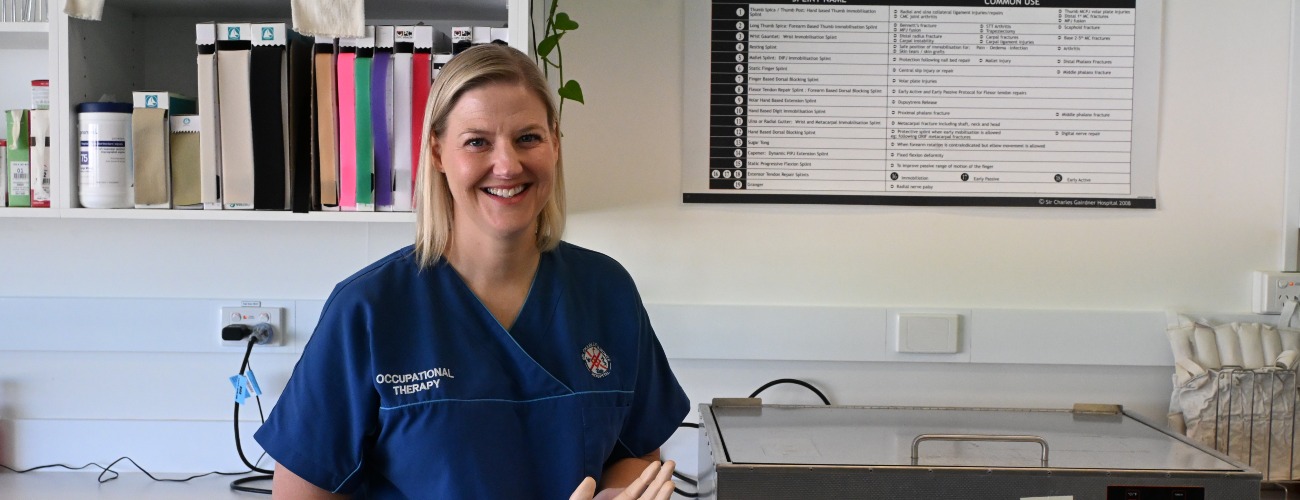
Occupational Therapist Bec Kevill is helping to make life easier for patients struggling to perform everyday tasks, through innovative research into an advanced hand therapy pathway, designed to provide earlier treatment, improve patient outcomes and reduce pressure on surgical waiting lists.
A new approach to earlier treatment
With more than 20 years of clinical and leadership experience across hospitals in Western Australia and Tasmania, Bec has specialised in hand therapy since 2008. Today, she coordinates the Hand and Upper Limb Clinic at SCGH, where she is helping to find better ways to care for patients.
Traditionally, people referred to plastic surgery for non-traumatic hand and upper limb conditions can face lengthy waits before receiving specialist treatment. During this time, pain and reduced movement can affect their ability to work, participate in sport and complete everyday activities.
Bec and her team’s research explores an alternative: an occupational therapy-led advanced practice pathway that allows specially trained occupational therapists to assess patients and provide early hand therapy before their first surgical consultation.
This approach helps identify the most appropriate treatment pathway sooner. Some patients improve with conservative treatment and can manage their condition without surgery, while those who need an operation can be prioritised for a specialist review with important assessments and treatment already completed.
The early results are encouraging
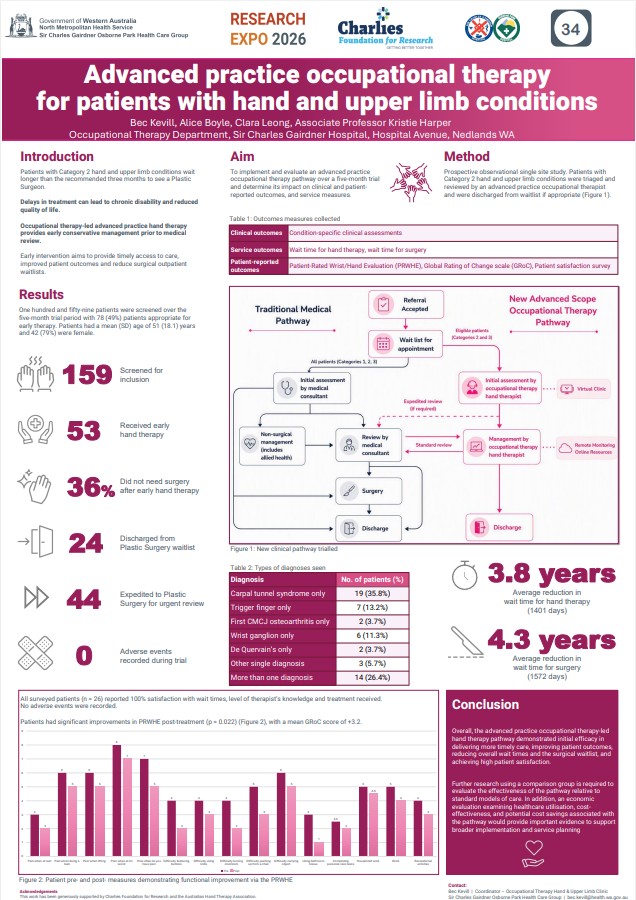
During the initial five-month trial, the team screened 162 patients and recruited 53 to receive early hand therapy. Interim findings demonstrate the potential for this approach to make a substantial difference.
Of the 37 patients discharged from the early hand therapy clinic at the time of the report, 16 were able to manage their conditions without intervention from plastic surgery. The remaining 21 still required surgical care but were able to progress towards treatment much sooner and enabled a significant reduction in wait time from referral to surgery.
Patients also reported improvements in hand function and pain following early treatment, with some able to return to sport and carry out work duties with fewer symptoms.
The pathway was also associated with a reduction in the hospital’s Category 2 plastic surgery outpatient waiting list, with 24 patients discharged by the advanced-practice OT from the waitlist in the trial. While the data collection and analysis are ongoing, these early findings demonstrate the potential for earlier intervention to reduce unnecessary disability, improve quality of life and help patients receive the care they need.
Research funding turning ideas into action
Bec and her team have had a strong progression through their research with her initial teammates receiving a Charlies Bright Ideas Grant which formed the initial research to then pave the way to larger scale projects, securing them a $30,000 Discovery Grant for project titled: Implementing and evaluating an advanced practice Occupational Therapy pathway delivering early treatment for patients with hand and upper limb injuries.
This funding helped the team establish the research, develop its assessment and data collection processes, secure the necessary approvals and implement the early hand therapy clinic.
Additionally, Bec has received a further $15,000 of support for the research project from the Australian Hand Therapy Association in 2024. She was also awarded the Best Research Paper award for her oral presentation of the results of the study at the Australian Hand Therapy Association national conference in August 2026.
Just last month, Charlies Foundation for Research proudly announced her as the winner of the SCGOPHG Research Week Poster Competition.
“These awards have really helped to raise the profile of occupational therapy and demonstrate the positive impact we can have for our patients and the hospital,” Bec said.
Building a better future for patient care
The next stage of the project will examine the financial implications of the new pathway, helping the team understand whether earlier intervention can also reduce healthcare costs by avoiding unnecessary specialist appointments and supporting better recovery. This economic analysis will help build the case for establishing the advanced practice occupational therapy service permanently.
The findings could also inform future hospital procedures, helping newly referred patients receive earlier assessment and the most appropriate treatment from the outset. For patients, the potential benefits extend well beyond shorter wait times, and can mean better hand function, less pain, greater independence and a renewed ability to participate in work, sport and everyday life.
Helping research make a difference
This work demonstrates how supporting clinicians to investigate new ideas can lead to practical improvements in healthcare and how through the generosity of our donors, Charlies Foundation for Research helps researchers and healthcare professionals test innovative approaches, build evidence for better care and explore solutions to challenges facing our hospitals.
This Occupational Therapy Week, we’re proud to celebrate Bec and her team for their dedication to improving patient outcomes and showing what is possible when research and clinical care work together.
Your support helps turn promising ideas into better care for patients and a healthier Western Australia.
Bec Kevill's First Place Research Week Poster: