New Investigator & Research Poster Awards
Research Week
16/10/2026
This year Charlies Foundation for Research has been proud to sponsor Research Week and assist with expansion across Osborne Park Hospital along with Sir Charles Gairdner Hospital through the poster displays and Research workshops.
The event is a chance to celebrate research excellence and featured presentations from research experts, competitions, a research panel discussion and an awards ceremony.
48 research posters were displayed as part of the Poster Showcase competition across both hospitals, capturing the diverse and innovative research being undertaken across various departments to support the health of the community.
Research Poster Awards
Congratulations to the following research poster winners:
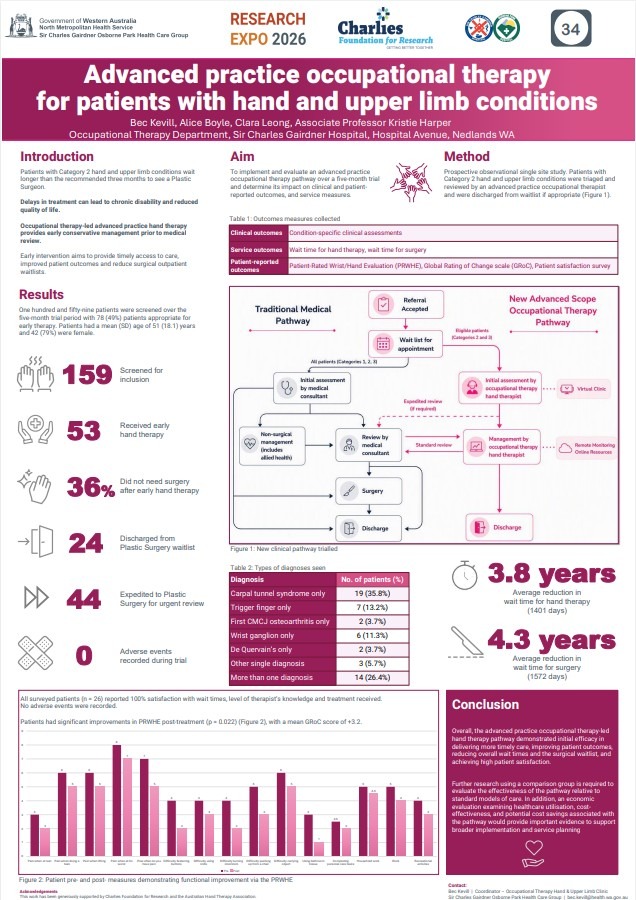
First place: Bec Kevill – Advanced practice occupational therapy for patients with hand and upper limb conditions
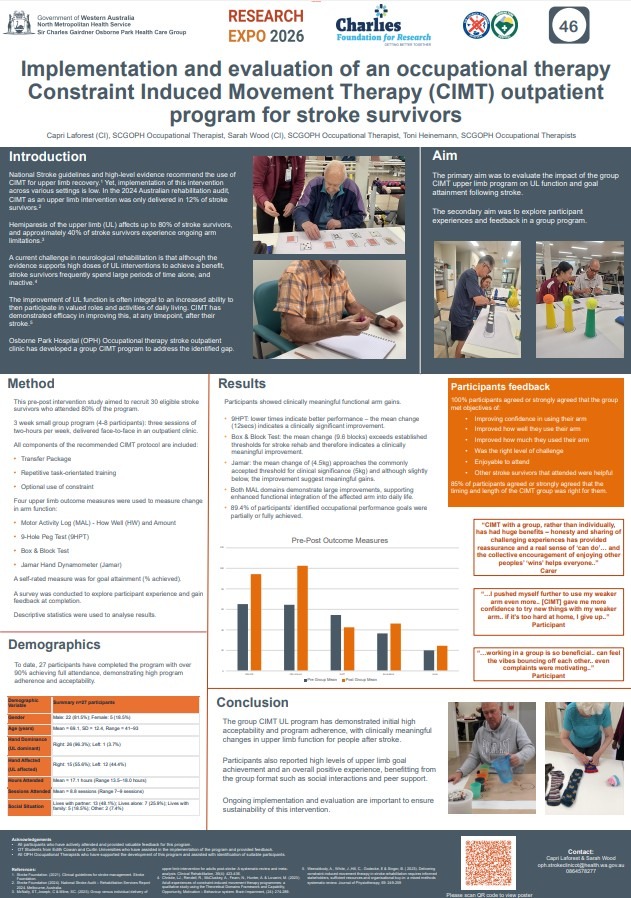
Second place: Capri Laforest and Sarah Wood Implementation and evaluation of an occupational therapy Constraint Induced Movement Therapy (CIMT) outpatient program for stroke survivors
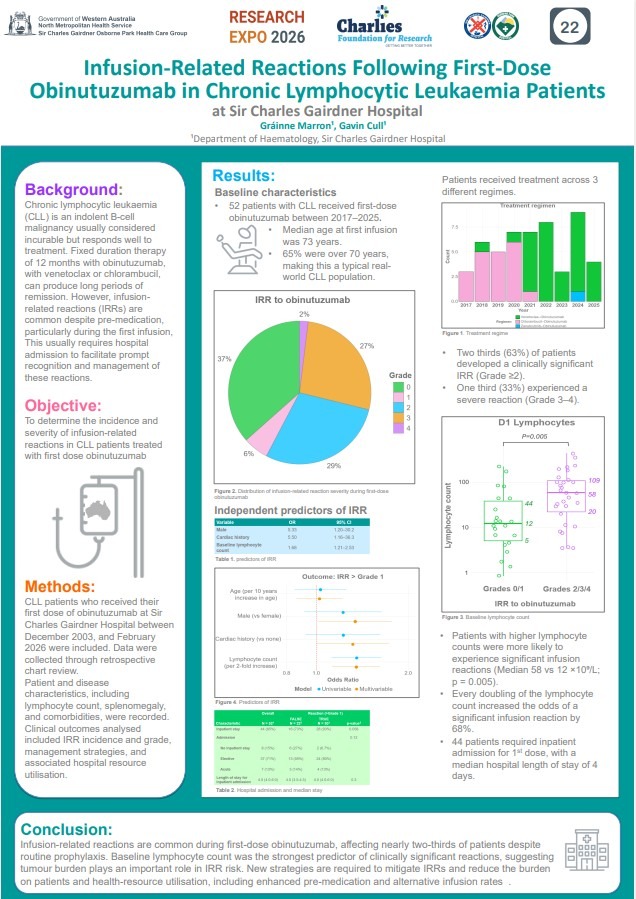
Third place: Gráinne Marron - Infusion-Related Reactions Following First-Dose Obinutuzumab in Chronic Lymphocytic Leukaemia Patients
People’s Choice: Anneliese McNeil - Elder Abuse “No More Shame” Recognition and response in a sub-acute setting
People’s Choice: Kaylee Molin - Biomarkers from pre-therapy PET scans predict prostate cancer treatment response
New Investigator Competition
Our talented researchers also presented findings from their research projects as part of three New Investigator competitions. Congratulations to the category winners:
Scientific: Joel Noble - AI-enabled Personalised Medicine for Improving Advanced Prostate Cancer Treatment
Allied Health: Michelle Gyr - Exploring Community Pharmacists' Knowledge of Voluntary Assisted Dying and Authorised Disposal
Nursing: Luzanne Botes - Preceptors' Expectations of Newly Qualified Nurses' Performance at 3 and 9 Months of Practice
Clinical Medical: Dr Katherine Ferguson - Non-fatal strangulation and the incidence of bony, soft tissue and vascular injury on CT angiogram
Clinical Medical: Dr Xinxin Hu - Robotic Bronchoscopy Streamlines Lung Cancer Diagnosis By Reducing 'Redo' Procedures
Well done to all involved.
Thank you to the Research Department for their efforts in organising the week, and to all involved; our wonderful guest speakers throughout the week and our Q&A panel members, who spoke at the Research Evening.
Poster Finalists
First place: Bec Kevill – Advanced practice occupational therapy for patients with hand and upper limb conditions
Second place: Capri Laforest and Sarah Wood Implementation and evaluation of an occupational therapy Constraint Induced Movement Therapy (CIMT) outpatient program for stroke survivors
Third place: Gráinne Marron - Infusion-Related Reactions Following First-Dose Obinutuzumab in Chronic Lymphocytic Leukaemia Patients